January 12, 2026
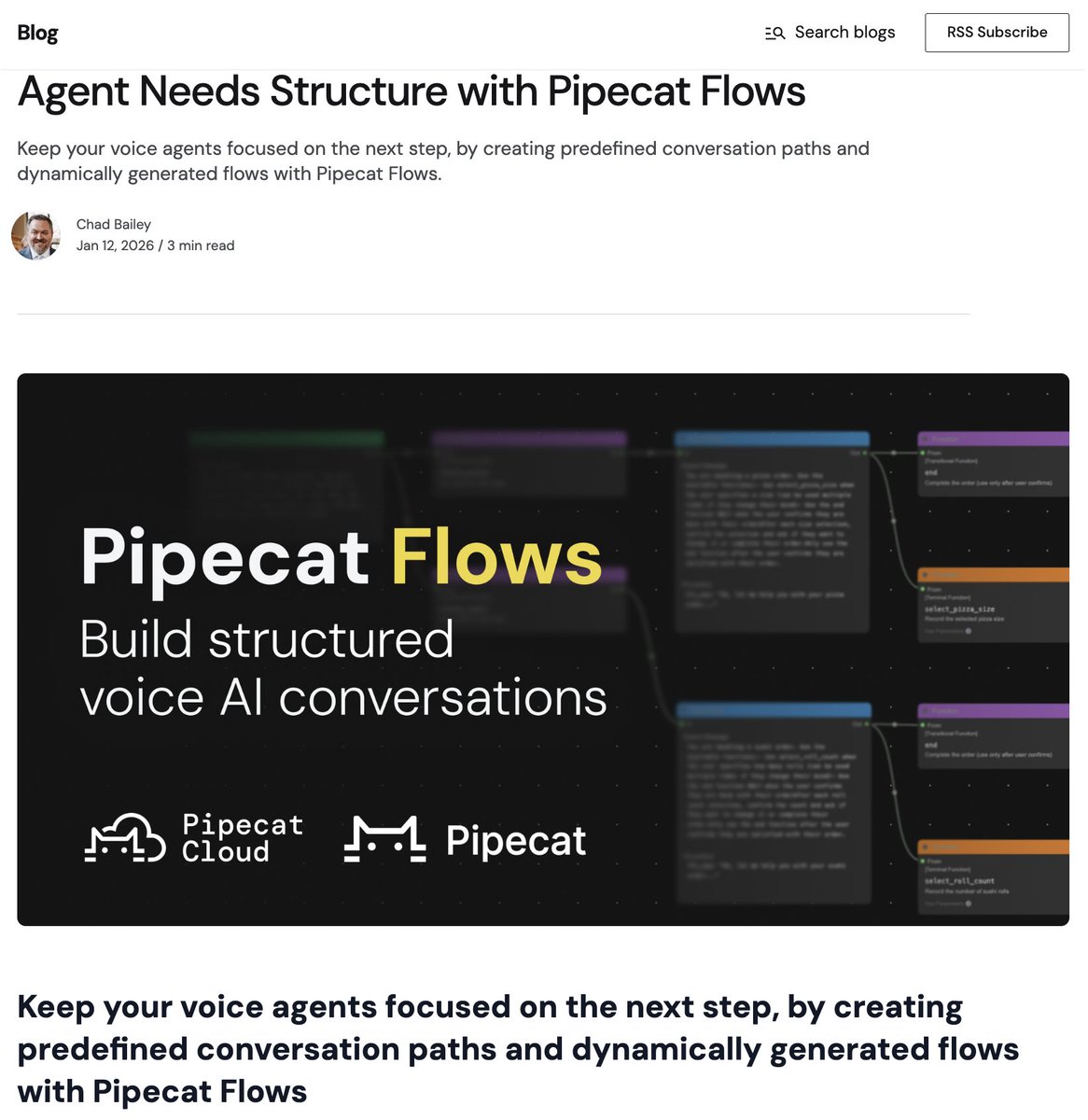
.@chadbailey59 wrote a nice introduction to the "structured conversations" approach to building super-reliable voice agents.
If you've been experimenting with Ralph Wiggum coding loops, you already understand the most important thing about structured conversations: throwing away old context is the *only* way to design complex LLM workflows that execute reliably.
Pipecat Flows is an open source library that supports structured conversations and context engineering for complex voice agent worfklows. Things like:
- Food ordering - the agent needs to answer questions, record items, confirm a delivery address, and take payment information.
- Healthcare patient intake - the agent must confirm identity and progress through a series of specific questions and answers.
- Booking hotel reservations - the agent asks for dates, performs one or more filtered searches, and interacts with a backend system.
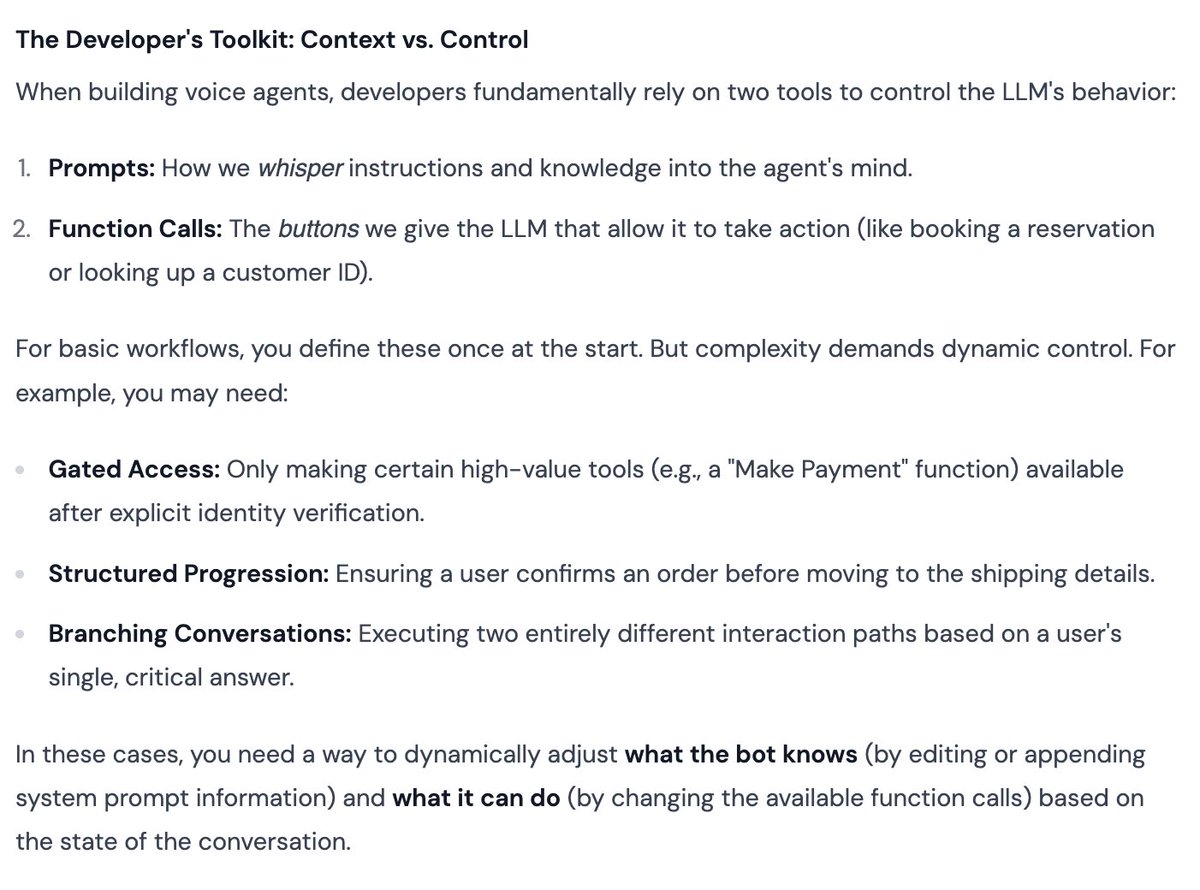
The basic idea in Pipecat Flows is that you can reset the LLM context at specific points during a voice agent workflow. When you reset the context, you change the system instruction and summarize (or sometimes just completely "forget") the conversation history.
This Pipecat Flows context reset has the same benefit as a Ralph Wiggum loop restart: giving the LLM only the most useful possible tokens for the next step in the workflow.
If you're interested in voice agents, check out Chad's post, and the Pipecat Flows examples in the repo.
Beyond the Context Window: Why Your Voice Agent Needs Structure:
https://t.co/HLltfKzPaz
Pipecat Flows open source structured conversations framework:
https://t.co/eiXtV53B9U
More on engineering reliability, especially for instruction following and tool calling, in multi-turn conversations:
https://t.co/F1bAEk0PPi