January 9, 2026
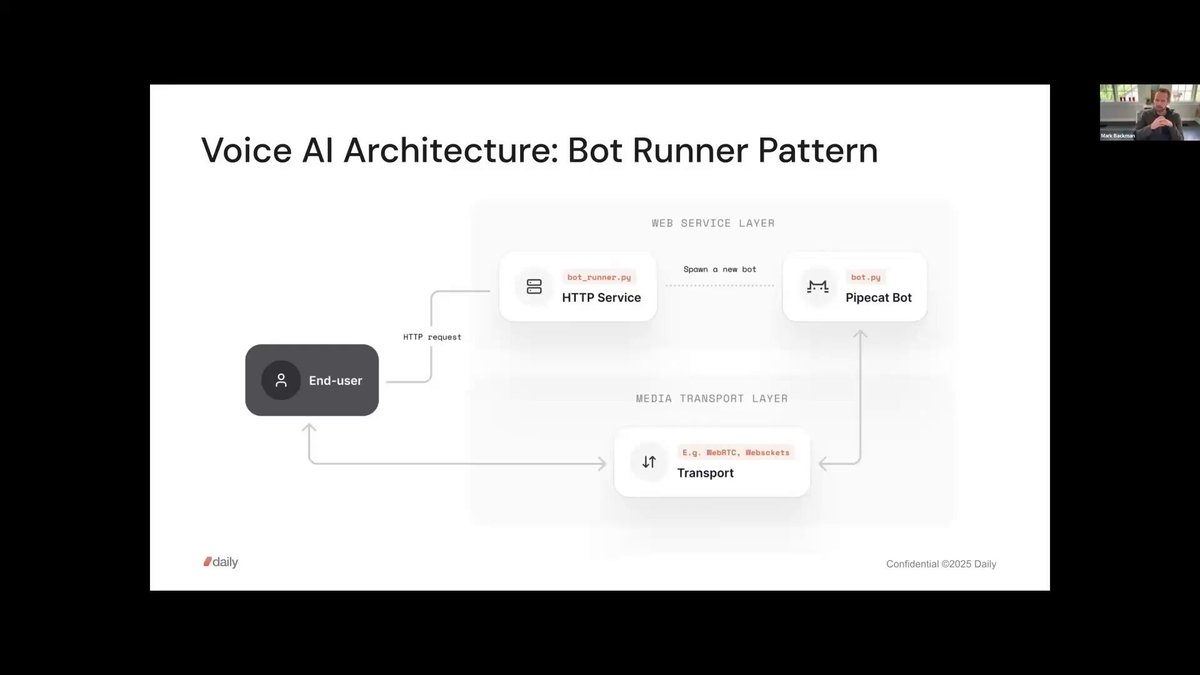
Last May, @mark_backman hosted the infrastructure session of our month-long community Voice AI course. Mark's overview is still the best primer on how to deploy voice agents to production: job processing and compute cluster requirements, network routing and audio transport, telephony interconnect, etc.
It's definitely worth watching the whole thing if you're part of a team building voice agents. I was re-watching Mark's video today, because we just declared GA for Pipecat Cloud, the enterprise hosting platform for open source voice agents. I was curious how much has changed since Mark's overview last year (since everything changes all the time, these days, in AI).
My main two take-aways are that, first, these fundamentals actually haven't changed at all. "Below the AI" layer, the specific devops, scaling, and reliability problems are all the same. And second, these are all the pain points we've tried to solve with Pipecat Cloud.
If you're building your own voice agents but would like to just "docker push" to the cloud to get auto-scaling, redundancy, globally optimized network routing, and integration with SOTA services like the @krisp_hq VIVA noise reduction models, try out Pipecat Cloud.
More than 1,000 teams built with Pipecat Cloud during the beta and their feedback was incredibly valuable. My DMs are always open; if you spin up a voice agent on Pipecat Cloud, please tell me what was good, what we need to improve, and what you'd like to see us ship next.
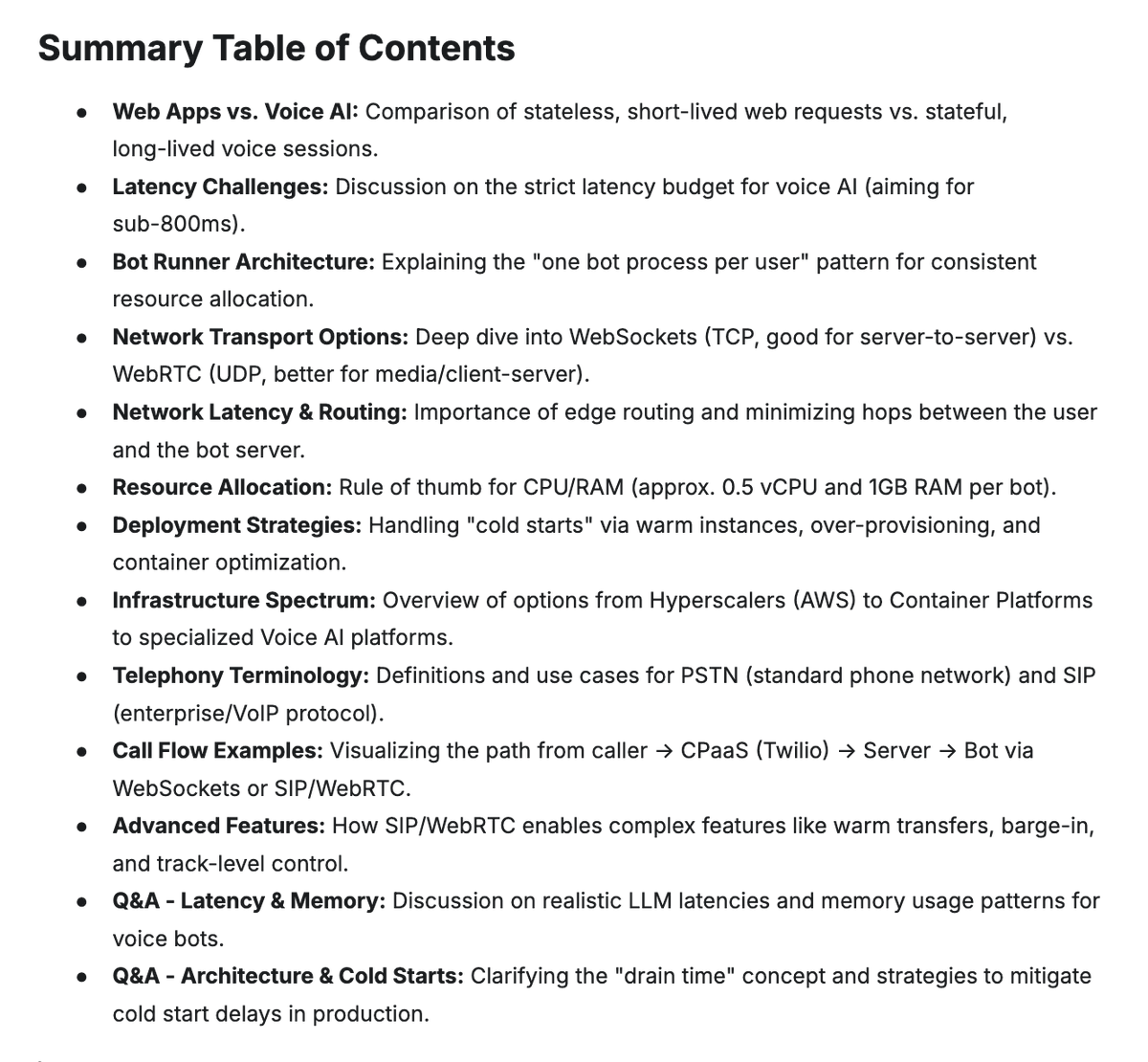
Full video of Mark's infrastructure session[1]
Get started with Pipecat Cloud[2]