August 18, 2025
Voice AI state of the art in 2025 ...
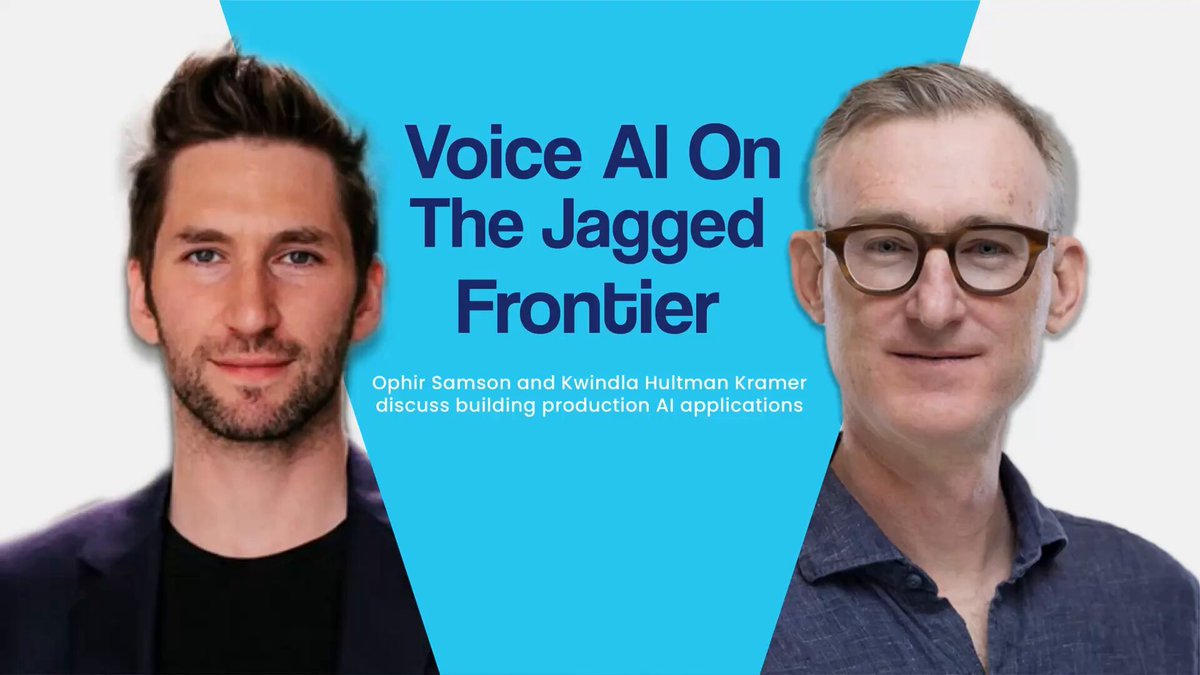
When Ophir Sampson showed me his AI interviewing and recruiting application, Ezra, the first thing I said to him was, that is really nicely thought through and executed. The second thing I said was, let's do this conversation again. Let's record it because anybody building an AI native application in 2025 should hear your thought process and see what you're doing.
Every feature of Ezra is designed to leverage what LLMs can do. Ezra's real time voice conversations, which is the stuff I think a lot about, are impressive as standalone features, but they're even more impressive because of how they fit into the overall product design.
Users interact with the platform and configure Ezra dynamically through voice conversations. Then job applicants participate in interview conversations with an AI agent. After that, they have access to personalized coaching and other features, which are different conversational modes, but build on the same core foundations inside the product. And every voice conversation becomes input to further analysis and to customization loops in the Ezra experience.
Topics:
Introduction to Voice AI and Ezra: An overview of the current state of voice AI and an introduction to Ezra, an AI-powered recruiting and interviewing platform. (00:00)
Ophir Samson's background: Ophir has a PhD in applied math, an MBA, and is a repeat founder. (01:50)
How Ezra works: A detailed explanation and demonstration of how Ezra's platform functions for both recruiters and candidates. (06:09)
The future of voice AI: A discussion on the evolving landscape of voice AI, including challenges and future possibilities. (14:27)
Ezra's cheat detection feature: An in-depth look at how Ezra detects cheating during AI-powered interviews. (11:57)
The role of context in AI conversations: Exploring the importance of context in creating meaningful and effective AI-driven conversations. (13:51)
System design in voice AI: The challenges and best practices in designing robust and scalable voice AI systems. Using @pipecat_ai, Pipecat Cloud, and the open source smart-turn model. (19:47)
The evolution of voice AI development: A look at the progress and future direction of voice AI development and architecture. (26:50)
Open source and community in AI: The role of open-source projects and community collaboration in advancing AI technology. (43:03)
How AI is changing coding: A discussion on how AI tools are transforming the way developers write and think about code. (46:21)
Full video here also available here[1]